







Workforce analytics software that connects learning, performance, and engagement

Turn connected learning, performance, and engagement data into the dashboards, reports, and board-level metrics your people team actually needs, inside Microsoft 365.

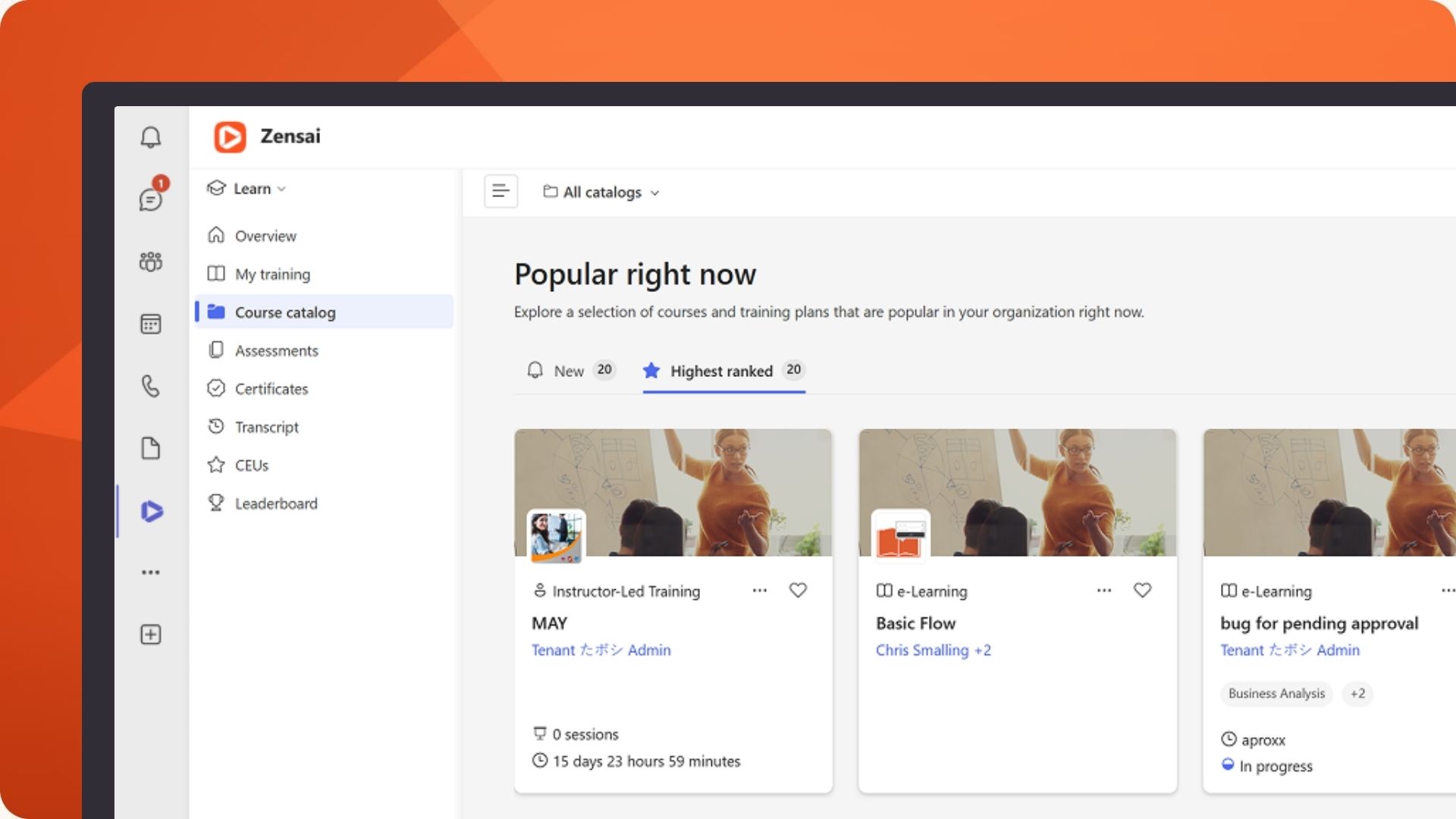
  • Dashboards for employees, managers, HR, and leaders, plus Power BI reports for deeper analysis
  • Automated report exports for stakeholders, plus a board-ready Human Success Score
  • Built natively inside Microsoft 365: Teams, SharePoint, and Copilot
Microsoft Certified App Status for Zensai
DAZN Zensai Customer Logo
PS Logistics logo
BDO logo
Phoenix Software logo
NHS logo
Penske logo
Maersk Container Industry logo
First Business Bank Logo
Marvin Doors and Windows logo

More workforce data than ever. Less connected insight.

You can see the pieces: courses completed, goals reviewed, engagement captured. What’s hard is seeing how they connect, because each signal lives in its own system. So people decisions lean on fragments instead of the full development picture.

84 %
of leaders run between three and ten different talent platforms (Korn Ferry, 2026 Global Talent Analytics Survey)
68 %
operate with only partial or minimal talent data integration (Korn Ferry, 2026 Global Talent Analytics Survey)
5 %
have fully connected talent data systems (Korn Ferry, 2026 Global Talent Analytics Survey)

Workforce analytics without Zensai
vs workforce analytics with Zensai

Connected insight across learning, performance, and engagement

Without Zensai
  • Learning, performance, and engagement data sit in separate systems that don’t talk
  • Dashboards and reports each run on a slice of the data, so no one sees the whole picture
  • Getting a connected view means pulling and reconciling data by hand first
  • No single measure of people health the board actually trusts
With Zensai
  • Connected learning, performance, and engagement data feeds manager and department dashboards, with Power BI reports for deeper analysis
  • The platform delivers the recurring exports stakeholders need on a schedule, without anyone building their own BI
  • A board-ready Human Success Score turns all of it into one measure of people health leaders can trust
  • Built natively inside Microsoft 365, drawing people data from Entra ID or your connected HRIS

Three editions, from single-source analytics to full Human Success

One platform, built natively inside Microsoft 365, in three editions. The deeper the edition, the more connected the data: at Grow the Human Success Score reflects primarily learning data; by Transform, learning, performance, and engagement feed the complete view.

Teams that turned scattered data into decisions

josh briggs
Josh Briggs
Head of People Development, DAZN
“We’ve moved from abstract conversations about performance to real data. For the first time, I’ll be able to see 4,900 development goals across our people, in real-time. That’s huge.”
85%
of goals captured, up from 10%
Read more
kaitlin koehler first bank
Kaitlin Koehler
Senior Talent Development Specialist, First Business Bank
“We reached 99% goal entry across the company. That only happens when people see value in the process.”
99%
goal entry across the company
Read more
Orange shelby colgan
Shelby Colgan
National Academy Manager, Belle Property
“We want to know: Is this training moving the needle? If someone’s completed 100 sessions and is in our top 10 agents—we know we’re doing something right.”
3x
increase in training engagement
Read more
Human Success Playbook

Ready to connect your people data?

Download the Human Success Playbook
zensai integrates with microsoft 365

Trusted by 2,000+ IT & HR leaders in Microsoft-first organizations

Zensai transforms learning, engagement, and performance into impact right inside Microsoft 365. No disruption, just smarter ways to grow where your teams already work.

FAQs

What is workforce analytics software?

Workforce analytics software, also called people analytics software or HR analytics software, brings workforce data together to measure workforce health and inform people decisions. Zensai does this for the data it knows best: learning, performance, and engagement, while integrated with your people data. Instead of reconciling reports from disconnected systems by hand, you get one connected view and a Human Success Score you can report upward. Built natively inside Microsoft 365, it works in Teams and Copilot, so the insight lives where people already work and stays alongside your existing systems of record.

What are the benefits of connected people analytics?

Connected people analytics gives leaders a fuller view of workforce health because learning, performance, and engagement are read together rather than in isolation. It helps teams spot patterns earlier, explain why a people metric moved, and align on one trusted picture of development rather than debating which system is right. Instead of arguing about the data, leaders can focus on what it shows and what to do next. That’s the point of workforce intelligence: not more dashboards, but a clearer picture to act on.

What’s the difference between workforce analytics, people analytics, and HR analytics?

In practice the three overlap and are often used interchangeably for analyzing workforce data to inform people decisions. Workforce analytics and people analytics usually describe the broad discipline; HR analytics tends to point at the HR function specifically. Zensai focuses on the part it knows best: connecting learning, performance, and engagement into one view. For the single board-ready people-health metric built from those signals, see our Human Success Score page.

What analytics and reporting do you actually get?

A full stack on connected people data: in-product dashboards for employees, managers, HR, and leaders; Power BI reports for deeper, leadership-grade analysis; automated recurring exports for stakeholders who need regular files for audit, compliance, or budgeting; and a board-level Human Success Score as a single measure of people health. Because learning, performance, and engagement are already connected in one platform, you’re analyzing one data set rather than stitching sources together first.

Do we need to replace our HRIS?

No. Zensai runs inside your existing Microsoft 365 environment and connects to your HRIS rather than replacing it. Workforce data flows in through Entra ID and HRIS connectivity, so the analytics stay accurate as people join, move, or leave. Your systems of record stay exactly where they are. Zensai adds connected learning, performance, and engagement analytics, and turns them into a single Human Success Score, kept in sync.

How is this different from the people analytics in a large HCM suite like Workday?

A large HCM suite delivers people analytics as one module inside a heavy platform, connected to Microsoft 365 through connectors rather than built into it. Zensai runs natively in Microsoft 365, so the analytics live where people already work, without a full HCM re-platform. If your organization is already committed to a suite like Workday across every HR function, that’s a genuine choice. For a Microsoft-first organization that wants connected learning, performance, and engagement analytics without the suite overhead, native wins.

Does the AI score or rate our people?

No. The Human Success Score measures workforce health, not individuals for decisions. There are no autonomous ratings and no flight-risk scores against named people. AI surfaces what’s driving the score and where to focus, acting on its own initiative, but the decisions that matter stay with your people. It’s explainable, not a black box, with the drivers behind every number visible rather than hidden.

Which edition includes workforce analytics and the Human Success Score?

Each edition analyzes the data it holds, so analytics start from the first edition. The full connected picture arrives at Transform, where learning, performance, and engagement are all deployed. That’s where the complete Human Success Score and the deepest cross-domain analytics live, because all three sources feed one view of workforce health. Most organizations grow into it as more of the platform comes online.

How long does it take to get value?

Because Zensai deploys into your existing Microsoft 365 tenant, there’s no new infrastructure to stand up and nothing for IT to host. The analytics connect to the learning, performance, and engagement data you already hold, so the work is configuration rather than migration, and most teams are live in weeks, not months. A demo is the fastest way to scope your specific setup.

What do analysts say about the Human Success Score?

Fosway Group’s Chief Insights Officer, David Perring, called the Human Success Score “a bold and visionary step.” He added: “Simple enough to understand and not overwhelming. Focused enough to trigger debate and action. Human enough to matter.” Fosway is an independent HR and learning analyst, so the validation comes from outside Zensai rather than from vendor marketing. That’s one reason the Human Success Score stands up in a board conversation.

Where does learning analytics fit in people analytics?

Learning analytics is one important signal, but not the whole story. Zensai connects it with employee performance analytics and employee engagement analytics, so teams can see whether development is contributing to the outcomes they care about. Completion and enrollment show what happened; connected analytics show how that activity sits alongside goals, reviews, and engagement. That keeps learning in context rather than treating it as a separate report.

What do our customers say about Zensai?

Our customers are our best proof, and on G2 that proof comes straight from verified reviews rather than analyst or vendor input. Reviewers point to the same strengths again and again: an experience that feels native to Microsoft 365, a rollout that’s fast and low-friction, and a support team they genuinely trust. Read what our customers say in their own words on our G2 review page.

Stop Managing Tools. Start Driving Human Success.

30 minutes, shaped around your team.