Resources / The Human Success Show / Episode 1
The Human Success Show Season 1 · Episode 1 · by Zensai
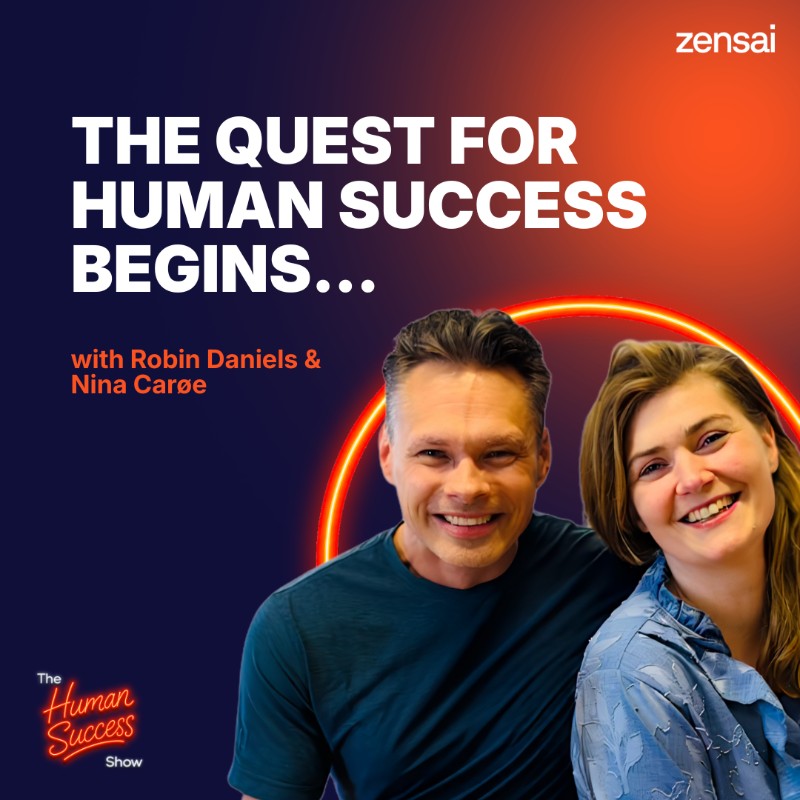
The Quest for Human Success Begins
Discover why Human Success matters now, what happens when people and performance become disconnected, and how organizations can help both individuals and businesses succeed together.
About this episode
Employee engagement is falling, leaders are under increasing pressure, and many people feel exhausted despite caring deeply about their work. At the same time, organizations need stronger performance, faster innovation, and constant adaptation in a world shaped by transformation and AI.
In the first episode of The Human Success Show, hosts Robin Daniels and Nina Carøe introduce the idea behind Human Success and the quest that inspires the season. They explore the connection between people and business performance, discuss the conditions that help people succeed, and set the stage for conversations with psychologists, leaders, HR practitioners, and high performers throughout the season.
Key takeaways
- 01Human Success happens when people succeed and organizations perform together.
- 02Engagement, motivation, and wellbeing are essential business outcomes, not just HR concerns.
- 03Great leadership creates the conditions for people to do their best work without sacrificing their humanity.
- 04AI creates both uncertainty and opportunity, making human potential more important than ever.
TranscriptShow / hide
This transcript has been generated by AI and optimized by a human.
[00:00:00] Robin Daniels: All right, here we are. I'm Robin Daniels.
[00:00:02] Nina Carøe: And I'm Nina Carøe.
[00:00:03] Robin Daniels: And this is The Human Success Show. We made it happen. Oh my God, can you believe it? We've talked about this for a long time.
[00:00:10] Nina Carøe: We did. We talk a lot.
[00:00:13] Robin Daniels: We do. This is true. We actually do talk a lot.
[00:00:15] Robin Daniels: Do you talk more than I—
[00:00:17] Nina Carøe: I think you talk more.
[00:00:18] Robin Daniels: You think so? I think you talk more. We'll see. We should do a little analysis after the first couple of episodes.
[00:00:25] Nina Carøe: Also, what men always feel about women?
[00:00:28] Robin Daniels: That's probably true. Touché, touché.
[00:00:30] Both: Touché.
[00:00:31] Nina Carøe: Anyways, to the topic of Human Success. Human success.
[00:00:34] Robin Daniels: We finally made this happen. So excited to host this show with you. What's this show all about?
[00:00:40] Nina Carøe: It's about human success. And what is human success? I guess for us, it's about figuring out how humans can be successful in the way they work, and also make organizations more successful. So it's that combination that we think is relevant to talk about.
[00:00:59] Robin Daniels: Yeah, I think it's... I can't wait. I mean, we've been talking about this idea of human success, it feels like, for a long time, and I'm so excited to actually do this with you because you and I really bonded over this idea of — we want to create a world where people have more motivation, desire, happiness in their work, but also, of course, in their lives, because the spillover is very... it's huge, right? You can't really separate your work from your life anymore. And this idea when you see these engagement surveys and just data in general, how dire it is for people — I think we both have an inner quest to kind of fix this and turn it around for humanity.
[00:01:37] Nina Carøe: Yeah. Yeah, and there's so many things playing into it, but if we look at those engagement surveys, we can see the employees' engagement has dropped year over year, at least since COVID. I don't know if it had already started before. And for a while we saw that leaders were actually okay, happy in their jobs, but now we can see that those levels are dropping too. Having worked in HR, it felt kind of underwhelming that I wasn't able to do anything about it. And so it made me think a lot about what is it about the way we live and work today that isn't really working out so well for most of us? So I think if we can change that for just a few people, or come up with solutions for how to actually create better work-life for people, then that would be so awesome, right?
[00:02:28] Robin Daniels: Right? That's one of those data points I don't even know where to begin with, like how to unpack that one. And hopefully we'll unpack that during the show itself.
[00:02:36] Nina Carøe: Yeah, so I guess for us it's about really solving people's pains that they are apparently feeling related to work-life, broader even than the company perspective. But I mean, on the other hand, I guess both you and I have been working long enough that it has to be combined with the success of the companies, because otherwise it won't be sustainable. If companies aren't performing then there won't be jobs. And on the other hand, if people aren't thriving and engaged, we'll end up in a situation where performance also won't be sustainable.
[00:03:04] Robin Daniels: For sure, for sure. And how do you come at it? What's your background?
[00:03:08] Nina Carøe: So I come from a background of HR, right? And I worked in HR for a long time. I worked primarily in tech startups. And just have been in environments mostly where we had to build up the HR department, and also in environments where there was a lot of focus on attracting talent, just because in tech it's been historically difficult to attract tech people, right? So there's been, I guess, a lot of focus on creating great environments, environments where people wanted to come to work and stay for a long time. So I think I've been lucky in that sense and kind of grew up with that focus.
[00:03:53] Nina Carøe: And yeah, did that. Started my own company because I was a bit underwhelmed with what impact I was making in the HR role, after having done that for seven, 10 years. And wanted to do something where we could change the situation for HR people out there. So the seat at the table that I know I've said several times other places — I want HR people to have a seat at the table, but obviously if they're gonna have a seat at the table, they also have to understand what's key for the business to achieve and align people initiatives to that. And it's not, again, either people engagement or company performance. It has to coexist. So that's the great but also the difficult balance that HR people going forward will be able to solve for companies. So I think very much that there's a future for HR out there. We call it human success, not HR.
[00:04:56] Robin Daniels: Well, it's a great background. And honestly, in the couple of years I've known you, I've learned so much from you about how to think about motivating people, treating people, and how to actually measure the output and outcome of the investment in people. So huge thank you. My background is — I feel like I've very much had a front row seat to the good and bad of building high-performance teams, culture, and so on. When I was 21, I moved from Copenhagen to California and worked at Salesforce, at Box, at LinkedIn. I've taken a few companies public. I've seen cultures do really well, but also certainly cultures not do so well. And what I've become obsessed about at this point in my career is really around — how do you create the alchemy, the magic that creates the conditions for people to do really well at work? And it's a very hard thing to solve 'cause there's so many factors that go into that. It's about team dynamics, it's about culture, it's about personal motivation. It's about lots of different things, and hopefully in this show we're gonna explore all those different aspects with amazing speakers. This first season — and we're labeling this as a season because we're gonna come out with a couple of episodes that will dive deep into certain topics — this first season's all around the quest for human success. And we're gonna have psychologists, we're gonna have HR practitioners, we're gonna have business leaders, we're gonna have Olympians on this show — people who have performed at the highest levels or understand what it takes to perform at the highest level. So I'm just excited to dig into that. But for me personally, it's just — yes, of course I want to do well at work, I want to have success, I want everybody around me to have success — but it's also about how can you do that in a way where there's also joy and fun and laughter as part of that, and it's not exclusive. I feel so often I've been in, or around, cultures that have turned toxic or political, and it's just soul-destroying, right? And so I know you and I bonded over this idea of human success being this thing that — yes, we of course want people to succeed. Ultimately, you don't have a company if you're not successful, but it can't be at the expense of people suffering. You have to kind of figure out the balance of making people successful and the company successful kind of equally. So really excited for that. And I just, again, in this journey that you and I have had for the last couple years, learned a lot from you on this. What are you excited about talking about this season?
[00:07:12] Nina Carøe: It's all of it. I think there's so many angles to it. But I just have to say that I'm so happy to speak with you about these things, because I think you've obviously been interested in the leadership side of human success for years now, and also before we talked about human success here at Zensai. But I think what you also bring is that kindness to how you lead. You're both kind to yourself and you're kind to your surrounding. And I think that goes a long way in terms of building teams that are thriving. And that doesn't mean that you are not gonna be able to make difficult decisions — you do that, I see that — but the way you approach these things makes it more human. And I think it's just back to what leadership is about.
[00:08:03] Nina Carøe: Decisions are decisions, situations are the situation. You don't know what's gonna change with AI, or you're gonna have to make hard decisions. But if you continue to be kind and just have that as a baseline, then I think you can actually, in the bigger picture, make a very positive difference for a lot of people that you meet on your way. So I think that's a little bit of a life goal for me too. So I really, really love that in you.
[00:08:30] Robin Daniels: Well, thank you for saying that, it means a lot 'cause this is ultimately what I want my legacy to be. And I know we share that passion as well, and I see the way you interact with people — but it's totally mutual. Let me ask another question 'cause I'm curious. I haven't known you since childhood — were there any moments in your childhood, or maybe in your early career, that made you go — did you feel like there were some of these moments that shaped you into who you are today?
[00:08:59] Nina Carøe: I think two things. Like an experience that I learned from — what I didn't want it to be as a leader. I was a scout when I was a child, right? And then we had these summer camps where I was the leader of one of the teams. And I was just so hardcore in my leadership style because I really just wanted to win.
[00:09:19] Robin Daniels: Because you really just wanted to win. And you're not that way today at all.
[00:09:21] Nina Carøe: No, I would never be like that.
[00:09:22] Robin Daniels: In certain ways you are.
[00:09:24] Nina Carøe: I try to control myself because I know it's not nice to win if you have a team that's miserable. And I was like 12 years old, and I can just remember that camp just wasn't very nice because I had won, but I had just not had a great time. So anyways, that's the first thing I remember.
[00:09:46] Robin Daniels: Having known you now for a few years, you do have a strong desire to win. You really do. It's really interesting. And I don't think there's anything wrong with that — because you want the people around you to win, you want the company to win, right? I think it's awesome, but you do it in a very human way, very compassionate — it's not like winning at all costs. And maybe you've learned to moderate that over time. Is that what you're saying?
[00:10:06] Nina Carøe: Yeah, I just deeply believe that winning is nothing if you don't do it as a team. It's a group effort, and if we're more people we can do much greater things than I know that I can't do it all on my own, right? And at the core, I'm a people person. I depend on people actually liking me also — otherwise I can't really survive.
[00:10:26] Robin Daniels: Did somebody point this out to you, or was it just self-reflection?
[00:10:29] Nina Carøe: It was self-reflection. So my first job — I finished studying my master's degree just around the financial crisis, and then I went out and I didn't get an HR job, but I got a leadership job in retail — it was a bakery, a cafe chain — and I just learned what's the reality of running a business from a leadership perspective. And so at that time I didn't feel super proud of that first role, but when I then went into HR in my next role, I understood how it was to be a leader. I've always had that kind of business focus and outcome focus. And I understand the little things that you can do as a manager that make the big difference for a team. And it's actually not about big programs or big investments — it's just about being there and building trust and being available when people need you. And also, I would say, setting people up for success in what gives them energy. And I think sometimes we all can do that for periods where we lose track on what is it that gives us energy. And I think that's more important than ever, because we're so busy with transformation, and that's not gonna change — I think transformation is gonna be the thing that we do, right? But in all of that, what is it that we get energy from? So when I go home from work, how do I feel? Do I feel more energetic or do I feel totally exhausted? And that's one of the topics that I would like to discuss this season — why is it that people who love their work, love their company they work for, and their team and their leaders and all of that, but they still feel more exhausted than what they did perhaps five years ago? Why is that? I think that's one of the things that I'm hoping to—
[00:12:13] Robin Daniels: Honestly, you're a master of this. There's many times in the last couple years where you've said to me, "Hey, I feel like your energy is probably not where it needs to be because you've spent time on the wrong things." And it's really good, a great way to remind me to spend my time and my energy on the things that have the most impact. And I truly appreciate that in you, because it also takes courage, I think, to say that to somebody, right? 'Cause sometimes you get so focused on something, this problem that you need to solve, right? And you're very good at pulling me back out of it and saying, "Hey, focus your energy on the things that really matter." And of course, in any job there's always gonna be things that you maybe don't wanna do. But if you spend too much time in that zone, you can easily lose motivation, right? And you've been really great at pulling me out of that zone sometimes.
[00:12:57] Nina Carøe: I think that's where burnout is for most of us, at least — the people like yourself, your work is a huge part of your life, super committed, and it's basically everything you do and think about all day, every day — when you don't run a marathon, which is also a bit too ambitious in my opinion, but okay.
[00:13:23] Nina Carøe: I think everyone is like, in the evening, before they're going to bed, they're like, "We're gonna die." "Machines are gonna take over the world." I mean, honestly, everyone has these moments these days, because — who owns AI? Who's the puppet master behind the whole thing? It's very scary. So that's one way you can feel about it.
[00:13:46] Robin Daniels: Mm.
[00:13:47] Nina Carøe: I mean, obviously not.
[00:13:47] Robin Daniels: No, obviously not.
[00:13:49] Nina Carøe: I understand why that's — what, like, and that's also how I feel sometimes. I'm like, "What is going on?" Because it feels like — everything was already becoming more and more complicated. You were exposed to more and more info and change was happening faster and faster. And I think that's really just escalated over the last five years or so. And now it's just like this on top and we're all like, "Okay, so we have to change what we build, how we go to market" — the whole infrastructure of our company in terms of how we work, the org chart, the cost we're gonna have for AI and not for employees, or are we gonna have to do that? And what is gonna happen? So everything just changes now. And I think that's, uh, a bit of a — in Danish we say "pust" — like, we're all exhausted at this point. But then on the other hand, I think it's super exciting, because for myself, I'm now able to build a demo for how I think our product should develop. I did that before summer, and I was writing you and Rasmus that I'm so motivated and I'm having so much energy I can't put my computer down. And honestly, I haven't been feeling like that for some time. So that was also a moment for me where I'm like, hmm, I should probably go back to what is it that gives me energy. But also, I'm able to, because of AI, be much closer to our customers in so many ways, because we can get so much info, and that stuff I don't have to do, so that I can use my time on something else. And in that way, it's so exciting. I feel truly excited for my role in HR. Also because there was a new book out saying "The Age of HR," which — we think it's the age of human success. Let's not talk about humans as resources.
[00:15:30] Robin Daniels: Mm.
[00:15:31] Nina Carøe: Let's talk about people—
[00:15:32] Robin Daniels: Barf. Ugh.
[00:15:32] Nina Carøe: —for success. Yeah. But I think that's right, because AI is fine. It's technology, and we use it, and we use it better and better because humans learn quickly, right? And they adapt easily — that's how it is. And I think I'm also an optimist on that. And then there's the business outcomes, and then there's something in between, and what is that? That's everything that people do, right? It's the agility, it's the ability to innovate. It's all of that, and that's what I do.
[00:16:07] Nina Carøe: That's what I'm supposed to do, and I love to work with — so now there's this huge space for me to actually be much more involved in building — doing the—
[00:16:18] Robin Daniels: —right thing for both entities.
[00:16:19] Nina Carøe: I mean, I can just see how much energy it has unleashed for you, being able to do some of these things that even two, three years ago was nearly impossible, right, to do. But I also think it's an appropriate human response to be excited but also a little bit nervous about it — like, what is it... I would question anybody who's probably just all in on being super excited, 'cause there's so many unknowns still around this, right? And I think we're just at the early beginning of it, but it's certainly unleashing creativity, time, focus, in ways that we didn't even think possible just two, three, four years ago. I think it's wild. And sometimes I feel so excited about where it's going, but I feel behind — but I look at others and I'm like, "Wait, I'm way ahead of them." And that's one of the learnings we'd had, right? Because one of the learnings that we're actually now also talking to some of our customers about is that we all go on LinkedIn and then we see someone who's automated themselves and can now do three work in one day and, you know, now they're superhumans. And we're like, "I learned how to automate my inbox with AI." So it feels like we're behind all the time because we're seeing this kind of end goal out there which we don't even know is the actual end goal. But on LinkedIn it's like super much pressure on that, and then we feel insufficient, right? And so I think what we learned internally — and that's actually our CTO and our VP of development — they came back and said, for us, they've defined what are the maturity steps in terms of where we need to be. And so we've communicated to the development teams: we are at step three. And that's fine, we don't have to be at the ultimate step of where we are all working side by side with AI, fully automated, whatever. It's okay. And so that gave some relief to the organization, because they still see companies out there saying — I saw just another company, a big Danish company, going out in the news in Denmark yesterday saying, "We've sorted it out. We've figured out how to work with AI to get the efficiencies and create more value in a very safe, compliant environment." I would probably question if that's entirely true. But okay, anyways, good for them. But not all companies have to be there, and it's fine. We just have to understand how good are we at all of this working with AI, and where do we need to be at what time, and then talk about that in the organization so that we don't feel this invisible pressure for being something that we're not even supposed to be — but we think because of who we are as people.
[00:18:50] Robin Daniels: Well, it's also — I mean, you and I have chatted before about — I am where I am in my life 'cause so many people along the way believed in me, pushed me in a certain direction, giving me the skills, motivation, knowledge I needed to be successful. I know you as well. And I think now with AI, you actually do this en masse for everyone, right? Because the more AI knows about you and where you've been, where you are today, and where potentially you wanna go, that AI can become, in some ways, a super coach for you or super mentor. That's something that democratizes this for everyone — which I think is super exciting, because one of the reasons we're coming back to how disengaged people are — both employees, managers — is because they feel stuck. There's nobody on their side, nobody pushing them in a certain direction, they're not learning anything new. And we're in this magical age where you can actually scale this at a personal level, not just at this generic superficial level where you give the same advice for everyone. But the more we know about you, we can push you in a direction, or at least guide you in a direction that's right for the future you that you want to become one day, which I think is super inspiring.
[00:19:51] Nina Carøe: I think of, like, an example — you remind me of an example from one of our exec meetings, where I was like, "What the hell is going on in this meeting?" Something was off in the dynamic — which happens for well-performing teams, it's good to have conflict, it's fine. Anyways, so what I asked AI, like — can you try and analyze the sentiment or the language in this meeting? What is going on? 'Cause I feel we're off, but I can't exactly put my finger on it. And it gave me such great feedback, which is also so much easier to go back to you guys and say, "Look, I tried to run this through the machine, and this is kind of the ups and downs, and we should probably consider this." And it's just a small thing, but it's really helpful. And it just helps us improve as a team.
[00:20:40] Nina Carøe: And then on the other side of the spectrum — is, you know, control, which is — I was, in one of the conferences in the UK, it was a year ago, at Festival of Work, where there was a journalist after I did a talk about human success score and how to kind of help the teams perform through learning, performance, engagement, and all of that. And she came and said, "Okay, but couldn't this potentially be misused by leaders? So they're now tracking, are they learning, and if you're not, then you're out." And I think my answer to that is: yes, you can have leaders who are absolute—
[00:21:19] Robin Daniels: —assholes.
[00:21:20] Nina Carøe: —and they're gonna be toxic, and they're gonna mess up this. And I think that's — I mean, you can use AI for that, but you can also use it for creating more space for creativity and innovation and all of that.
[00:21:33] Robin Daniels: I love the perspective. I mean, what's the alternative — that you focus on using it for evil? That's just true of any technology — you can use a car for evil if you want to, or social media or your phone, right? So I think there's so many good things that can happen because of it. So maybe just to wrap up — this is season one, and we're titling this "The Quest for Human Success," because this is the beginning of a quest. A quest really doesn't always have a defined end, and hopefully this will continue on for a long time. We're gonna have multiple seasons where we're gonna just explore different aspects of what it means to unlock this full human potential. We're gonna have amazing speakers. Is there anything in this first season that you're particularly excited for?
[00:22:18] Nina Carøe: Uh, to understand how humans can best manage in this kind of environment where we're gonna have to start working with AI and potentially become superhuman.
[00:22:29] Robin Daniels: Superhumans. Super human success.
[00:22:31] Nina Carøe: Super humans. Super human success.
[00:22:33] Robin Daniels: Well, I can't wait to do this with you. We've been talking about this for a long time. I'm so excited to finally make this happen. We had an amazing team behind us who put this together for us—
[00:22:42] Nina Carøe: Yeah, it's a dream.
[00:22:43] Robin Daniels: Absolutely, it's amazing. So I can't wait. Sometimes you'll have Nina as your main host, sometimes you'll have me, sometimes you'll have us together, which is super exciting. But we can't wait to explore all these exciting topics.
[00:22:55] Nina Carøe: Yeah. Let's f***ing go. Yes, let's go. And also, I would like to hear if anyone has suggestions for themes or potential guest speakers that we could invite that you'd like us to talk with.
[00:23:07] Nina Carøe: So all input is welcome. See you.
Meet the hosts
Say hi to Nina and Robin
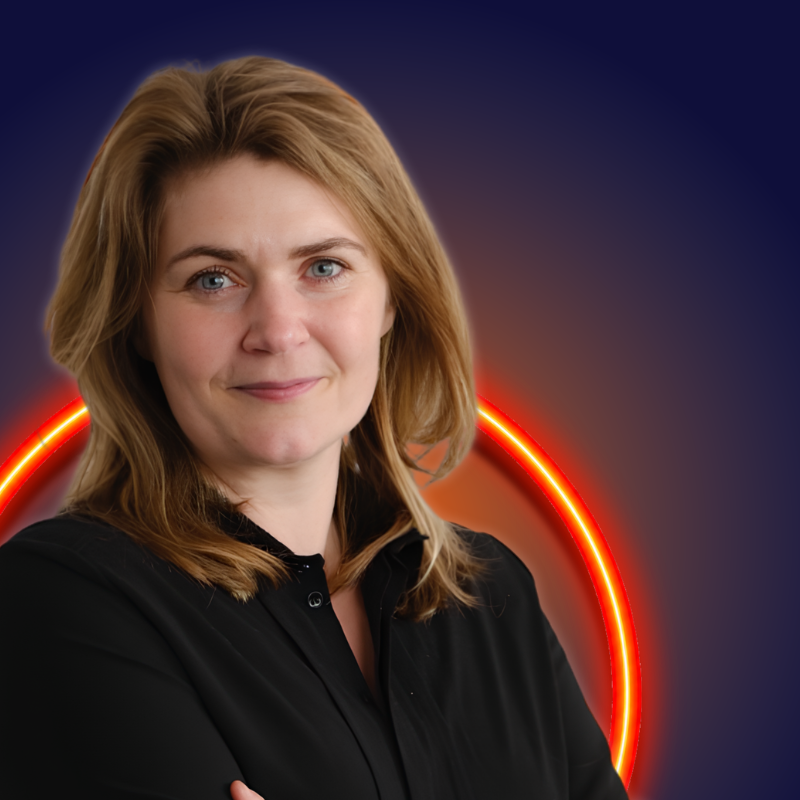
Nina Elisabeth Carøe
Host · Chief Human Success OfficerNina Elisabeth Carøe is the world's first Chief Human Success Officer at Zensai, with extensive experience in people, culture and organisational development. Having held leadership roles at Unity Technologies and Dixa, and co-founded HR tech company Valuebeat, Nina challenges conventional thinking about work and what it takes to build environments where people can perform at their best.
LinkedIn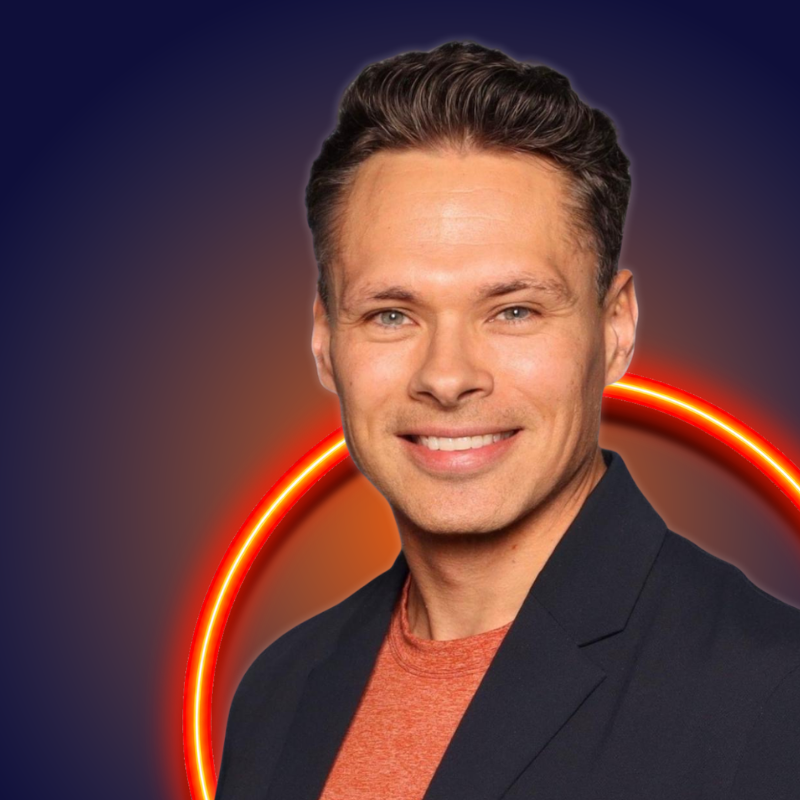
Robin Daniels
Host · Chief Business OfficerRobin Daniels is Chief Business Officer at Zensai, with over 25 years of experience helping global technology companies grow, including Salesforce, LinkedIn and Box. A speaker, author and storyteller, Robin brings infectious energy and a fresh perspective to conversations about ambition, innovation and what it takes to achieve extraordinary things.
LinkedIn
Related article
You Can Love Your Job and Still Feel Completely Exhausted
Why do employees feel exhausted even when they love their jobs? Explore how leadership, AI, and employee engagement shape human success at work.
Read the article →