The conversation has shifted — and it’s urgent
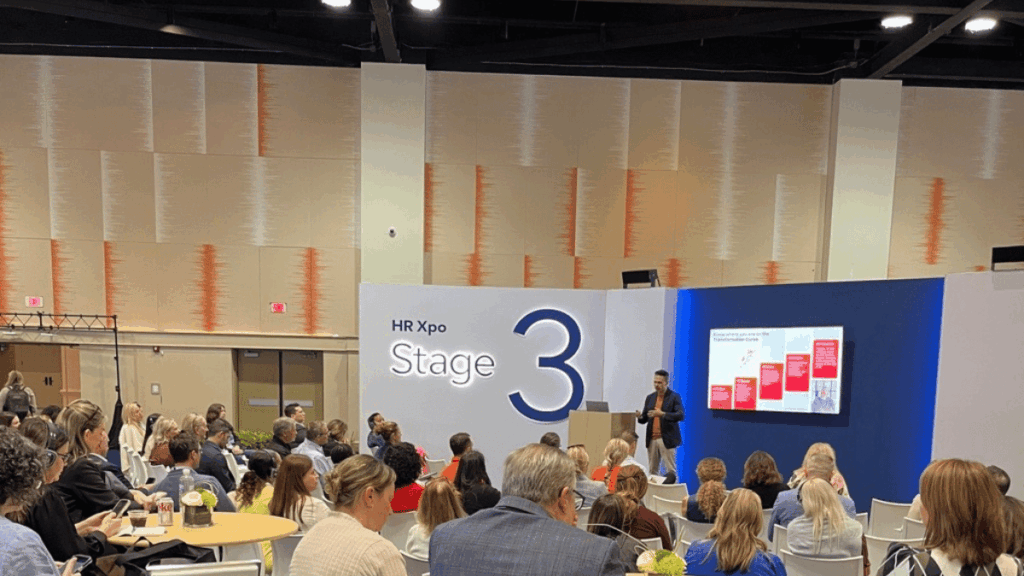
At Gartner HR Symposium/Xpo 2026 the dominant question wasn’t which AI tools to deploy. It was the CHRO priorities to focus on now, before the environment shifts again, to ensure the function is leading rather than reacting.
Two of the most closely watched sessions at both events addressed that question directly: VP Analyst Mark Whittle’s Top CHRO Trends and Priorities Shaping 2027 and VP Analyst Jessie Knight’s CEO Concerns 2027: Implications and Actions for CHROs. Between them, they laid out a clear set of actions — the things Gartner believes HR need to move on before 2027, while there’s still runway to do it deliberately.
The Four CHRO priorities
1. Apply product principles to deliver speed to value
The best HR functions, Gartner argued, are starting to organize around outcomes rather than processes, applying what product teams call a “speedboat” or “tiger team” model to the areas where speed to business value matters most. This isn’t about rebuilding the entire HR operating model. It’s about identifying where a cross-functional, outcome-led team can move faster than a traditional HR function, and applying that model deliberately.
The distinction Gartner drew is one HR has been slow to internalize: efficiency and speed are different things. Standardized processes give you efficiency. Organizing around outcomes gives you speed to value.
2. Establish human accountability for AI — before someone else decides for you
This was one of the highest-urgency CHRO priorities from both events. Gartner cited research showing that a significant share of CEOs want to treat AI agents as employees, a framing their analysts challenged directly. Agents aren’t accountable; humans are. The CHRO’s role here is to make that position clear at the executive table, to define tiered accountability structures before incidents force the issue, and to fix performance management so that managers can evaluate work done by human-AI teams, not just individual human contributors.
Gartner was explicit: this work cannot wait for a governance framework to arrive from the top. HR needs to set the terms now.

3. Reduce workforce load — including by addressing skills anxiety
Gartner’s data showed a workforce carrying more than it was designed to carry — middle management shrinking, entry-level hiring down, expectations rising. The framing that most deserves attention: workforce load isn’t just about volume. When people don’t feel ready for today’s work, that itself creates stress. Which means skills development isn’t just a growth conversation — it’s a workforce health one.
Rather than investing in comprehensive skills taxonomies as an end in themselves, Gartner’s recommended CHRO priorities involve identifying the small number of capabilities that actually differentiate the organization. The 80/20 rule cited applies: around 20% of skills typically drive around 80% of the value. Identify those capabilities first, build activation plans around them, and monitor continuously.
4. Help leaders deliberately disrupt — including themselves
Gartner shared a striking data point: 91% of executives admit to overstating their AI expertise. The people making the biggest decisions about AI in their organizations often understand it least. That creates a specific challenge for CHROs: how do you help leaders let go of legacy behaviors and develop the judgment they need for an environment none of them has worked in before?
Gartner’s suggested approaches included senior mentoring circles where C-suite leaders model the willingness to not have all the answers, and AI “sparring partners”: tools that actively challenge leaders’ decisions, surface alternatives, and help them build better judgment in their real work, rather than in formal training that sits outside it.
What Gartner’s Futures Lab added: seven forces beyond technology
One of the most thought-provoking sessions at both events came from Gartner’s Futures Lab — presented under the title Seven ‘What If’ Trends Beyond Technology — which argued that planning for 2027 by focusing on technology alone is like trying to understand the Industrial Revolution through the power loom. Seven forces are converging with CHRO priorities like AI adoption to shape the environment HR leaders will operate in.
Several stood out as particularly relevant. The “digital doubles” question asked whether organizations might create AI avatars of employees from their captured expertise, raising immediate issues around consent, employment contracts, and compensation. The “tokenomics” trend challenged the assumption that AI is always cheaper than human labor, with early evidence that costs are rising faster than organizations anticipated. And the “certified human” concept, a growing market for work and content explicitly made by people, has direct implications for how HR builds culture around AI adoption.
The Futures Lab’s framing: don’t plan for the world technology alone will create. Plan for the world that emerges when technology, economics, social norms, trust, regulation, and environmental pressure all move at once.

The question every CHRO should be asking now
2027 is closer than it looks. The organizations best positioned for it aren’t waiting for the environment to stabilize before they act. They’re building the accountability structures, the leadership capability, and the learning infrastructure now — while there’s still runway to do it deliberately.
For a full picture of the CHRO priorities this year’s Gartner events revealed, read the companion piece: Productivity Isn’t the Prize: What Gartner HR Symposium 2026 Actually Said.
And for a timely discussion on what good HR looks like in the age of AI, watch our conversation with CIPD: AI, People, and Performance: What Does Good HR Look Like Now?
Want to see how Zensai helps HR and L&D leaders build the capability, accountability, and engagement infrastructure for what’s ahead? Book a conversation with our team.