

In a recent webinar, I spoke with Robin Daniels about what it really takes to build a workforce ready for what comes next. If you joined live, you’ll have felt the tension in the conversation. AI is no longer a side topic. It’s reshaping work fast, and it’s forcing you to rethink how you plan, develop, deliver, and mobilize capability.
Here’s the uncomfortable truth most leadership teams are still avoiding. If your workforce strategy and planning live in a spreadsheet that gets updated once a year, you’re not planning. You’re explaining last year.
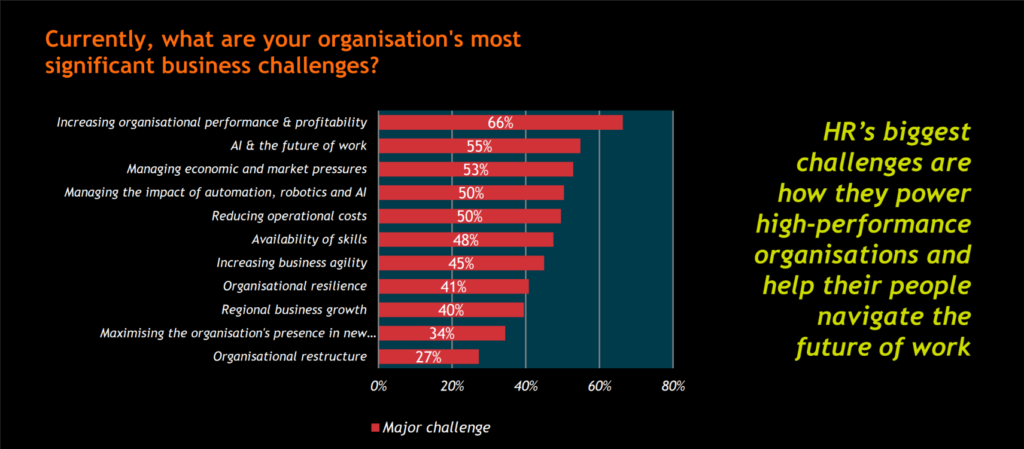
You can start with one headline that should matter to every board and executive team. Almost 80% of EMEA leaders expect to accelerate AI adoption. So even if your organization feels cautious, the market won’t wait for you. Workforce strategy and planning are now both a strategic risk and a strategic advantage.
What workforce strategy and planning data is telling you
Let’s be direct. Most organizations still can’t see their own capability clearly enough to act early.
Data discussed during the webinar shows that 86% of companies lack the ability to see their skills, build or acquire what’s needed, and stay ahead of market demand. As a result, many leaders fall back on headcount planning because it feels concrete. However, headcount planning doesn’t tell you whether you can execute. It also creates a comforting illusion of control while work changes underneath you.
At the same time, skills are changing faster than most planning cycles can handle. From 2015 to 2025, staying relevant in the same job typically meant picking up three to five new skills, while job tasks changed by more than 40%. If your planning process still assumes stability, it will always lag behind reality.
You can also see the shift clearly inside learning. AI has become the number one driver of learning strategy, overtaking upskilling, business transformation, and compliance. That should change how you think about L&D. You’re moving on from just optimizing content libraries to building the capabilities people need to stay valuable as work evolves.
AI replaces tasks, not people
One distinction from the webinar changes how you should plan. AI does tasks. It doesn’t do skills. So, you should stop asking which jobs AI will replace and start asking which tasks AI will absorb, and what high‑value work remains for humans.
This isn’t theoretical. HR professionals estimate that around half of what they do today could be automated and still be effective. L&D professionals report a similar view of their own work. When you see that pattern across functions, it’s a planning signal.
Work will split. Some tasks will disappear. Many will change. A smaller set will become more valuable. If you keep planning around job titles, you’ll reskill people for the wrong work and hire for the wrong gaps.
Why skills‑based organizations stall
You’ve probably heard leaders say, “We need to become skills‑based.” The intent is real. Yet only a small minority of organizations say they’ve actually made the shift.
So why does progress stall?
- First, many organizations plan around roles because roles feel manageable. Tasks don’t. They change faster than job descriptions ever will.
- Second, skills data is fragmented across HR, learning, talent, and performance systems. That fragmentation makes it hard to see capability as a single, usable picture.
- Third, people often under‑report their skills. Unless you actively validate and enrich skills data, your baseline view of capability stays incomplete.
Don’t wait for perfection before you start when all you need enough clarity to stop guessing. One practical first move is to get clear on where you are today using the data you already have. That clarity alone changes the quality of the conversation with the business.
A real‑world workforce strategy and planning scenario you’ll recognize
Imagine your CFO asks a direct question. If we automate customer operations and redesign service workflows, can we deliver the same outcomes with fewer people, or do we need different capability?
If your workforce planning is role‑based, you’ll probably respond with a hiring plan, a restructure, or both. That response takes time and often misses hidden capability inside your existing workforce.
If you plan at the task and skill level, you can respond differently. You can identify which tasks AI can absorb, which tasks still need human judgment, and which skills you need to strengthen to protect decision quality, customer trust, and productivity.
From there, you can choose whether to build capability, buy talent, borrow expertise, or automate further. That shift is the heart of strategic workforce intelligence. It’s also where workforce strategy and planning start to earn their seat at the table.
The leadership metric you should care about: talent velocity

During the webinar, I introduced a concept I think leaders should adopt as a core lens: talent velocity. In simple terms, it’s about how quickly your organization can build, mobilize, and apply capability as work changes. This matters because AI compresses timelines. If you can’t move skills quickly, you’ll experience recurring disruption. You’ll hire late. You’ll retrain late. You’ll reorganize late.
On the other hand, if you build talent velocity, you can turn uncertainty into a competitive advantage.
Where you should start now
If you want one practical starting point from the webinar conversation, it’s this: Find the business transformation projects already underway and attach workforce strategy and planning to those hotspots. Then surface the capability data you already have so you can speak with credibility about where you are today.
After that, move tactically while thinking strategically. Build short wins that prove value, then scale what works. If you take anything away, let it be this. Workforce planning is no longer a calendar event. It’s a continuous readiness discipline, and AI has made that unavoidable.
If you wait for perfect certainty, you’ll simply fall behind with more confidence. Detailed planning will only get you so far. The organizations that win will do so by reacting faster and bringing their people with them.
On-demand | Building a Workforce Ready for What’s Next with Zensai & Fosway
Join Robin Daniels and David Perring, Chief Insights Officer at Fosway, for a conversation on how HR leaders can move beyond workforce administration and start enabling true workforce readiness. This session explores how HR can evolve into a strategic driver of workforce capability in the age of AI.


