

Resources / The Human Success Show / Episode 2
The Human Success Show Season 1 · Episode 2 · by Zensai
Can Organizations Create Real Purpose at Work?
Discover why purpose is not something organizations declare, but something people experience, and how leaders can create the conditions for meaningful work that drives both performance and fulfillment.
About this episode
Every organization talks about purpose, yet many employees struggle to connect their daily work to something meaningful. The gap between a company’s stated purpose and people’s lived experience can undermine engagement, growth, and performance.
Pernille Hippe Brun shares how organizations can discover and strengthen purpose by building on what already gives people energy, meaning, and motivation. Drawing on Appreciative Inquiry and decades of coaching experience, she offers practical insights for creating workplaces where purpose is experienced by everyone.
“You can go much further if you go together with people who are also on the same mission as you.”Pernille Hippe Brun
Key takeaways
- 01Purpose is discovered through real experiences and behaviors, not mission statements alone.
- 02Organizations grow faster when they amplify strengths and moments of excellence.
- 03Coaching and development should be accessible to everyone, not only senior leaders.
- 04Purpose is universal, but how people experience it varies across cultures and contexts.
TranscriptShow / hide
This transcript has been generated by AI and optimized by a human.
[00:00:00] Pernille Hippe Brun: How can we create systems around individuals so the individual doesn't have to feel I need to go alone to accomplish something? How can we together create conditions so that we can have human success all over the company?
[00:00:22] Robin Daniels: Hi, I'm Robin Daniels.
[00:00:24] Nina Carøe: And I'm Nina Carøe.
[00:00:25] Robin Daniels: And this is the Human Success Show. And we're here today with Pernille Hippe Brun, who is the founder of Get Session, a leadership consultancy, also a leadership coach to many great entrepreneurs and founders, and also just an amazing human who has spent your career really inspiring and helping other people do the best work of their lives. Welcome to the show.
[00:00:43] Pernille Hippe Brun: Thank you, Robin and Nina.
[00:00:46] Robin Daniels: Before we get into the topic of discussion, which we want to cover today, which is really diving deep into what gives somebody purpose at work. How do you distill it? How do you get inspired by it? How do you lead by it? How do you live by it? All these kinds of things. Why don't we hear a little bit about your journey first? How did you get into this field? How did you start out?
[00:01:05] Pernille Hippe Brun: Thank you for asking me that question. And it's interesting because how do you choose what to do with your life and not least work life, right? If that word is not already outdated, if we even call it a work life or -
[00:01:17] Nina Carøe: Just life. Yeah.
[00:01:19] Pernille Hippe Brun: So basically I started out studying physical education because that was where my whole aspiration was in the early days. I wanted to use my body, I wanted to educate others within physical exercises and have them feel the same joy I would feel whenever there was some physical activities going on. So that was how I started out becoming a teacher within gymnastics and swimming and helping others learn and grow from that field. But then eventually I found out that my career path perhaps would be a little bit boring because within that field, most of what you do is teach in high schools or you can become a researcher and stuff. And I felt a little bit limited, so I changed my field to psychology and ended up becoming an organizational psychologist. And that's when my journey took off because then you would put me in the box of becoming a psychologist, helping others learn and grow. (02:12): But then I found out that it's much more effective if you can have a system help the person learn and grow. So I became a co-founder of a company in Denmark, a consultancy where we would do strategic workshops and leadership workshops and that company grew. I ended up exiting when we were 25 employees. It's not that many, but enough. And we were a thriving company and we used methodologies within the strengths-based leadership sphere. We did a bunch of coaching of leaders and managers and employees, but we also did the systemic level change processes where we would gather communities around a purpose or how to help an organization engage the whole workforce around a purpose. And I exited mainly because my husband actually co-founded another company and we had to choose where to put our energy. And I followed him on his journey and we lived in San Francisco for a little while because his company's headquarter was in San Francisco. (03:15): And that gave me a little bit of insight into the startup community from another angle, another part of the world, but also a whole other way of helping one another learn and grow because the ecosystem in San Francisco at that time, we speak about 2013 to 2016, I was living out there, was very much about community, very much about helping one another learn and grow. So the competition wasn't felt in the way where you had to go pitch, you come and you had to really, but also about how can you help one another? What is it you have to offer that others don't have? Some had access to money, some had access to great coaching and stuff. So that was a learning experience. And we grew that company, ended up having offices all over the world and I was part of building up the leadership development and also training in that company. (04:08): And then when we moved back to Denmark, I founded the company I have now together with my son actually. He's my co-founder and he built a platform for coaching so that we can now connect professionals with great coaches all over the world.
[00:04:22] Robin Daniels: That's amazing really. What a journey. And I know we've known each other for many years, all three of us actually have now. And I know you spend a lot of time with entrepreneurs and founders and trying to get them to the next level because building a business is tough, right? Yeah, you're excited, you've got your mission and then something happens and you start doubting yourself and so on. I know you do great work with a lot of these founders. I speak to them and they all praise you a lot. So kudos for you. What is the mission of the organization you founded now?
[00:04:48] Pernille Hippe Brun: We were founded based on the assumption that coaching should be equal to all, so democratizing coaching. So basically giving every individual the opportunity to be connected with a great coach. So what we saw was basically that a lot of executives get access to great coaches. First of all, they have the money to pay for it, but also it was okay to get a coach when you were at that level where you were important enough to get that access. And we found that was a little bit unfair because what we saw in our whole journey into this sphere of coaching was that everybody needs a coach. It's like when you are within sports, when you are trying to excel, and that's where I started out, you get a coach and there's nothing wrong with that. It's not because you are broken or you need to be fixed, it's because we want to help you learn and grow. (05:44): And we just felt the same should account for development within organizations, within learning and development. Why not give everybody access to a great coach who can help you in your development and on your learning journey?
[00:05:57] Robin Daniels: And I think it's so interesting because I was actually talking to you and Rasmus a lot when I joined here that I had the same sensation that we would have in HR teams or people in coaching teams who would have HR BPs or we would have HR consultants and they were supposed to coach. But coaching isn't just something that you do.
[00:06:15] Pernille Hippe Brun: No.
[00:06:16] Nina Carøe: It is quite difficult and you really need to understand what to do, not to do. And also I think, so what happens, I think sometimes with myself, but also with other HR people that I work with, it becomes nice because you become a little bit important because you have that relationship with people, but it becomes less about the individual and bringing the individual to actually become independent of you and more of retaining this kind of role a little bit, one of the pitfalls at least. So we're talking a lot about how can we make sure that the employees get access to coaching because I see leaders struggle in that relationship because you can't expect that leaders can coach also to the same extent that a professional can.
[00:07:00] Pernille Hippe Brun: And there's a power dynamic.
[00:07:01] Nina Carøe: It's a power dynamic. So it's not even possible if you look at it in that way, but it helps so much when you have someone who helps you in looking at yourself and your own kind of behavior and patterns and these things. So I can really relate to how important it is, not only for exec leaders, but also for employees in the company. But can I just ask you, because I know you now for some years, and I think what's interesting about you is that when I interact with you, you seem to me like you're a free soul, very creative.
[00:07:34] Pernille Hippe Brun: It's hard to box someone in who doesn't belong in just one box.
[00:07:39] Robin Daniels: I get from her, right?
[00:07:41] Nina Carøe: A free soul.
[00:07:42] Pernille Hippe Brun: Yes.
[00:07:42] Nina Carøe: Exactly. Why are you like that, do you think?
[00:07:45] Pernille Hippe Brun: So I'm extremely driven by community. So there's something about building things together and having the possibility to change the world, not alone, but together. And I find my people where that can happen and that doesn't just happen in one place. So maybe that's why it's hard to put me in a position and then I'm expected to stay there for years. And I think many people feel that way. I want to be somewhere where I can learn and grow together with others and make change happen together with others, not just alone. And I think that free spirit comes not so much out of wanting to rebel or wanting to stand out or wanting to not be boxed in, but to really feel where can we make change happen and where can I make a difference together with some like-minded people? And that changes all the time. (08:43): So in my first consultancy, I felt my mission there, it wasn't finished, it wasn't done when I had been there helping grow the business after five years, but I felt that they were ready to move on and the company still exists. And so I think that thing about knowing that my time is out now, I need to go somewhere else and do something else.
[00:09:06] Nina Carøe: And I would actually like to zoom in on that period because I think that's a period a lot of people go through and they stay for some reason and they don't move on, but they're struggling. What did you do in that? Because I assume you felt something was done within you. You started feeling differently about going to work or doing what you were doing.
[00:09:26] Pernille Hippe Brun: It wasn't as fun anymore. Then you start thinking about your conscience. Should I stay to secure the future business? And what will people think if I leave? Is it because I don't believe in the company anymore? Or what will it even look like at my resume? I've never though about that really for sure,
[00:09:45] Nina Carøe: But I think a
[00:09:47] Pernille Hippe Brun: Lot of people do think about what will look like if I leave now only after one, two, three years. But for me, it was very much about, okay, so I've paid my time here. It's like we build up the company, it was going great, it was going the right direction. Now I had a new opportunity to follow my husband on his journey and help out building up the leadership and everything there. It was a learning opportunity for me, but it was also applying my strengths in a company that needed it because they were three founders and they'd never thought about the human dimension in the way I had. So I felt they need that. Maybe they didn't feel it themselves, but I was a little bit - Yes, but also a little bit provocative in a sense that they didn't ask for it.
[00:10:32] Nina Carøe: And why I'm asking about it is because I think it's so interesting because I think we all go through these periods in our career, and what is it that you have or are able to do or something part of your core that perhaps make you, it's easier for you to listen to yourself and follow your heart in these situations? What do you think that is?
[00:10:50] Pernille Hippe Brun: So there's something about courage, which is very much about having the sense that I'll be catched if I fall or I can fail and people can laugh at me and they can do it all they want, but I'll still follow my heart. And my big brother actually supported me a lot in that behavior and helped me stay to that path or stick to my inner gut feeling of being able to.
[00:11:17] Robin Daniels: It's also why we're so funny. We talk a lot about coaching, but coaching comes in so many forms. I mean, that's
[00:11:21] Pernille Hippe Brun: A
[00:11:21] Robin Daniels: Kind of a form I think of coaching in some ways. I think I'm very open about, we talked about this before, I am where I am because so many people along the way have believed in me or pushed me in a certain direction, which is a form I think of coaching when I needed it the most to open my eyes to maybe a blind spot or new opportunity or something. Maybe that's a brother, a teacher, a mom, a dad, whatever it is. Can be a boss sometimes, but a lot of times it's not actually. It's other people. And it sounds like your brother was one of those -
[00:11:48] Pernille Hippe Brun: Yeah, he was a ripple himself.
[00:11:51] Nina Carøe: And I think that's interesting because I think it's more than coaching also what you talk about. It's more like sponsorship, honestly. And I think for me, the sponsorships, the one who's actually really supported me because they saw something and they helped me move forward. I think when you experience that in your career, that gives you faith in other people and that you can come into situation where people will actually help you move forward. I think the sponsorship is also interesting.
[00:12:20] Robin Daniels: You mentioned the word community and I sense this kind of yearning for belonging in some ways. And maybe because you didn't have it as a kid, maybe you've tried to create it yourself through community and it seems like you found your tribe
[00:12:30] Pernille Hippe Brun: In
[00:12:30] Robin Daniels: Some
[00:12:30] Pernille Hippe Brun: Ways,
[00:12:31] Robin Daniels: What you're good at where you can
[00:12:32] Pernille Hippe Brun: Contribute,
[00:12:32] Robin Daniels: But also you've kind of created your own community by the power of your strength and your will maybe to do so, right? Is that accurate, you think?
[00:12:39] Pernille Hippe Brun: Yes, that is actually very accurate. And I think that sense of belonging lives within all of us. We all have it. And it's interesting because we talk about not being able to box me in or being a rebel or whatever you call it, but there's this sense that if you can then belong with other rebels, with others who are on the same mission as you, you are so much stronger. So you can go much further if you go together with people who are also on the same mission as you. And I think that's where very often people mistake purpose, but also how we create change in the world with your wonderful word of human success, which is not about an individual. It's again about the community and the system around that person. How can we help one another change the world? So to me, I know you later have a question
[00:13:35] Robin Daniels: About
[00:13:36] Pernille Hippe Brun: That.
[00:13:36] Robin Daniels: That's perfect description of human success. She's hired.
[00:13:42] Nina Carøe: But it's just sometimes when you talk to people in a certain point in their career where everything is in order and you found your tribe and everything, I think it just can be a great learning to hear how did you get there? Because I assume you've had periods in your career where it didn't feel like that.
[00:14:00] Pernille Hippe Brun: Yes. I actually never thought about it. I never though about who supported it, which is so strange given what I'm doing for a profession, but who helped me? My brother saw me. I never spoke about him before in my life, and I didn't think about that fact that he actually did help me a lot by giving me kudos for standing out and for not just obeying when people said you can't play soccer, whatever. And then also teachers, that's very often what's mentioned that one teacher who saw you and who said, "That's okay, right?" Because I was an outlier in school and didn't fit in. And it took many, many years for me to come to terms with that, that I was able to find my tribe. And that was another teacher who actually gave me some tips on how to better mingle with the people who were around me. (14:53): And that one advice I got there, that was on a boarding school, we call it efterskole in Denmark, who saw me sitting there not really being able to speak with the others because they were small talking. And I was like, "What is that about?" And she said, "You know what? Just ask them curious questions. Here are five you can ask. Where are you from? Where did you grow up? What brings you joy during the day? Where do you find your best activities? What gives you life?" Questions like that. And that opened the world to me, and I've never ever felt alone since that teacher gave me those five questions.
[00:15:27] Robin Daniels: Wow. It's amazing.
[00:15:27] Pernille Hippe Brun: That's amazing. So it was not about me talking about myself, but me showing an interest in others and being curious about their lives, which is so simple. It's really so simple. But once you start getting an interest in others and really asking those questions, new worlds open up to you all the time. There's so much to learn. And for me, that's something I really run.
[00:15:51] Robin Daniels: And maybe using questions to get to what the purpose of why somebody does what they do, I think, because purpose can be so many things. It can be purpose with a capital P where this is the mission of the company, we're all going to deal with this. And that works sometimes, but also sometimes it's purpose with a lowercase P where it's like, I'm here because I believe in my team or I care about this project or whatever, or I want to make my family proud. I want to make money so I can support my... There are all kinds of different purposes. But I think asking the right questions, I've always believed that you get the best out of a team when you understand their true motivation for doing what they do, right?
[00:16:25] Pernille Hippe Brun: Yes, exactly. That teacher, I don't think she actually asked me to ask what motivates you, but more like what brings you joy and why are you here at this specific school? Why didn't you go to another school? And things like that. So all the questions really matter. The questions we ask really matter because the questions we ask also determines the answers we get and thus the stories that will unfold. So if you ask into all the things that can go wrong and why you think this is stupid place to be, workplace or school or whatever, then stories will start to unfold around that topic, which will bring people down. So it's about finding those questions that can spiral things upwards and bring things up. And that's another thing I would like to mention about your human success thing, which is actually that it means something that comes from the bottom up. (17:23): So I don't know if you know the etymology of success, the word success.
[00:17:26] Robin Daniels: No, please enlighten us. Yeah.
[00:17:29] Pernille Hippe Brun: Which is actually out of Latin, something that comes from the bottom up. So success is a bottom up process thing that happens when we take our time to lean back, in my opinion, and look at how can we create those conditions so that people can succeed around us. So I love that word.
[00:17:49] Robin Daniels: I love it. Yeah.
[00:17:50] Nina Carøe: Thank you for sharing that. That's good.
[00:17:52] Robin Daniels: I know, I know, I know. No kidding. We describe it a lot as the human part is you show up every day and you try to do the right thing, show with the right conviction, energy, enthusiasm for the team you're part of and the mission you're on together. And it's both an individual thing, but also very much a team dynamic because in a company, in an organization, everything you do is a group of people doing it together pretty much. You're never really alone, very rarely. And the success part, it sounds a little bit harder, but it's also about taking responsibility for your own progress, but also the progress of the team and the mission or the projects that you're working on. And you can't really have a company if it's just one or the other. Just having a company on vibes, it sounds fun, but if there's no progress, that's not success. (18:37): And if we just all go for growth, growth, growth, but the people are miserable, that's not really success. We think of it as this yin yang in some ways that they have to go together. It really comes down to people working together in the service of something greater than themselves.
[00:18:51] Pernille Hippe Brun: But the problem is that many companies are not like that, and I'm still puzzled why people haven't really gotten to that definition yet and found the power in what you just said.
[00:19:05] Nina Carøe: I think we've had for some yes, it's either or. Either the employees are happy or the companies are making more money. And it has to be both/and because there is no company without a group of people who's doing it, doing something together, trying to say something.
[00:19:21] Pernille Hippe Brun: The ying and yang the both end.
[00:19:23] Nina Carøe: Yeah, exactly. And when you look at LinkedIn, it's been a lot like, oh, all the employees against the evil corporates or whatever. But it has to be both. And of course it's not like everyone is perfect all the time, so it's not this constant middle road, but it's more of a balance over time. That's how I like to think about it. And I think for me, what helps me as a leader in terms of trying to set my employees up for success, but also myself and my career is one thing, do what gives you energy. So that's more where do your heart go or what is it that motivates you just from who you are? And also surround yourself with people who are just nice human beings and of course minded on doing something together. But I think these two things goes a long way, but I wanted to come back to that period where you were like, "I'm done with this now and I want to move on." Because I do think that's really a situation where a lot of people struggle and they can be struggling for years because they can't figure out how to let go. (20:26): So they stay because they don't know what's next, but they become frustrated and it's this negative spiral, as you said, because they start asking some question that leads to confirmation bias around what's going bad rather than looking at what could be the good intentions or what could be the opportunities.
[00:20:47] Pernille Hippe Brun: And then the fear, the protection mechanism around what if I give this up? What will I then do? What's next for me? And what if nothing? So the fear holds a lot of people back. And the problem is that if you do not let go of that fear and jump into it and stop doing what you hate and what drains you, you won't find the energy to figure out what you want to do next.
[00:21:16] Nina Carøe: So as a coach, what would you tell, I guess - Leaders.
[00:21:19] Pernille Hippe Brun: So carve out time, which is again, it's a lot about money. So I have an income, I'm dependent on the income. I can't just stop doing those activities because I earn money through doing those activities. But that's very rarely true for 100% of the time. Sometimes you think if I stop doing that activity at work that really drains me, everything will fall apart. No, just start small. Start with one thing that you do every day that really drains you and you think the world will end if you stop doing it. Try it. What actually happens? Are there people around you who will take up that task? Can you vocalize it and verbalize it and say, "This really drains me. It's not my thing. I'm done with it. Could somebody please help me here or teach me or a technique so that it doesn't feel that draining?" So people need to start speaking up about what gives them life and brings them energy and also what doesn't so that they can find some people around them who can maybe take off that task and help them.
[00:22:27] Robin Daniels: I'll tell you a quick story. I was in my first CMO gig, and I was living in California, and this was in 2014. I joined a small cybersecurity company and super excited, loved the team and everything we were working on. But after two years, I was just so unmotivated by cybersecurity. It was like, God bless the people who work on it, but it was not for me. It's like I would go to all these conferences and it was all about doom and gloom and hackers and malicious threats. It is,
[00:22:54] Nina Carøe: Isn't it?
[00:22:55] Robin Daniels: It is. Again, God bless the people, but it's not for me. But it was my first CMO gig, and I kept thinking, "What will it say to the VCs or the community if I leave that I don't have the power to stick it out or that I'm kind of weak and so on?" So I kept going around with this fear in my head, and for six months I kind of carried that around, but I was just waking up every day. I was so unmotivated because I'm like, "I'm not excited by the mission that we are on as a company or being out there marketing this thing." But then I had to shift my mindset and really face that fear. And I shifted it to, "Well, what does it say about me if I stay? What signal does it send to everybody? Because now I'm doing something that I don't love to do." So I had to come to terms with that and try to follow my heart and do something that I really believe in. (23:35): But it was a hard one because I'm like, the ego was there, my reputation, my losing a job that I was really good on paper and all these things. But I truly believe having the courage to follow your gut and your passion unleashes a new energy that you never even maybe knew you had within you in some ways when you started your company as well. Yeah.
[00:23:58] Nina Carøe: And before -
[00:23:58] Robin Daniels: I'm sure you had a lot of problems.
[00:23:59] Nina Carøe: Before that, I was actually shortly in a job where I ended up telling them that I was going to leave because I was going to go this direction. And the headhunter that had recruited me, he called me up and he said, "What's out that your CV doesn't look like you jumped from position to position?" And I was like, "Well, thank you for that. That's not helpful."
[00:24:20] Robin Daniels: I know exactly the feeling.
[00:24:23] Nina Carøe: I don't know what he got out of that comment because what would it help? It wouldn't make me stay and it didn't help anything other than just making me - But that's a
[00:24:31] Robin Daniels: Fear-based response, right? It's like, yeah.
[00:24:33] Pernille Hippe Brun: I spoke with a woman recently who had the issue of not being able to leave the job because she was dependent on the income right away. She has two daughters, and I asked her that question, "What kind of role model are you with your daughters? If you stay in a position that you hate, what signal are you sending to them? You have to stick it out. You can't say no. You just have to stay here and do what it takes. That's a really bad signal to send to your young girls." And she thought or pondered about that a little bit. I also spoke with her about other possibilities, and one part was the energy part. You won't find the energy to find what you love next if you stick around in this position. So sometimes the money is an issue. Then you have to just face it and try to jump out and do it anyhow and then see what will come up in the period of time you have, because very often you have, then you get three months perhaps, or you get one month. (25:31): And in that period, a lot can happen more than you maybe think can happen. And what happens to most people that I speak with about these issues is that they then find the energy to find a purpose again. They've lost it, but if you stick around in a position you hate for too long, you won't find it.
[00:25:48] Robin Daniels: No.
[00:25:48] Nina Carøe: And if I can just relate to that, because I'm so lucky here, I get to contribute to both product and marketing and sales or I try at least just and of course do work with human success internally. And I was actually talking to you and the other day, I was like, "What the heck am I going to do if I'm not going to stay here because now I want all of this?" And then I was thinking about, I was kind of turning this really great situation into a fear of something that didn't even exist.
[00:26:18] Pernille Hippe Brun: Yeah, it didn't even happen.
[00:26:20] Robin Daniels: That's how the mind works, right?
[00:26:21] Nina Carøe: Even for me, I'm happy in my role, but I already become afraid of what's going to happen in three years.
[00:26:29] Pernille Hippe Brun: People like you and me perhaps, I'm not sure, but we get many ideas and we can visualize many different outcomes. Not everyone has that strength or whatever we should call it. And I remember vividly once, one of my very good close friends, she said to me, "Oh my gosh, how did you get that idea?" Or, "Oh, you come up with 10 ideas a day." And I'm like, "Yeah, I don't have to act on all of them, but they're there all the time." And she was like, "She never gets ideas. She's very practical or close to whatever is happening right now and then problem solving. She has skills that I lack because all my ideas are great and stuff, and they're very useful when you leave a job to look for your next position, but it's also the grinding through every day that's needed in some positions. (27:23): But she does what she does best and I do what I do best. So it's also about figuring out," Okay, so if I don't see it, maybe I need help see it. "You don't have to have that capability within yourself to take that brave next step. You just have to find the people who can help you.
[00:27:42] Robin Daniels: That's why having a personal board of advisors is a really helpful thing, because I think what I'm hearing you say is this disaster thinking. We all have it, right? Sometimes it pops into your brain and you're like -
[00:27:53] Nina Carøe: No, but it's also just to show that even in a very... I feel happy with my role, but even in this situation, I can have fear about what's next. So people who are then not happy in their role.
[00:28:05] Robin Daniels: But do you get yourself out of it? Do you get other people to get you out of it?
[00:28:08] Robin Daniels: Yeah.
[00:28:08] Nina Carøe: So I laugh a little bit and say, I couldn't have imagined half the opportunities that came my way. And so I mean, there's something that'll come my way and I just don't know what it is yet.
[00:28:20] Robin Daniels: Because you're really good at what you do. You do it all.
[00:28:23] Nina Carøe: I don't know, but at least that's what my career so far has taught me.
[00:28:26] Pernille Hippe Brun: And that's when I found the methodology of appreciative inquiry, that's why I fell in love with that methodology because I think we as humans lack a more crisp theory or methodology that can actually help us see what's possible rather than what's the worst thing that could happen because our nature teaches, it's within us. It's an instinct to see what can go wrong and what we should fear and all those things. It's something natural. But the other part, we need to train it and we need to have someone help us see it when we are not seeing it. So I think Robin, perhaps you decided at some point in your life that you wanted to look for possibilities and what could happen. That's a rare thing and it's a great thing. It's your survival instinct as well.
[00:29:15] Nina Carøe: And very optimistic person too.
[00:29:17] Pernille Hippe Brun: Yes. And that spreads to your neighbors, right? So we need people like you. We need people who can help us spread that positivity because many, many people are not born with it and need that guidance perhaps in terms of, oh, but you look here where all the fear is and all the this cannot happen things, scenarios play out. What about if you look here? What will then play out for you?
[00:29:43] Nina Carøe: And I would also say at one point, what I did was it's more like a conscious choice. So because now we're speaking about either you're born with it or maybe it's maybe not -
[00:29:52] Pernille Hippe Brun: But it is a conscious choice. But someone perhaps needs to show you that you can choose.
[00:29:57] Nina Carøe: That you can actually choose. Yes, exactly. Because you can actually do that.
[00:30:03] Robin Daniels: That what I write about a lot on my LinkedIn. I feel like my personal mission purpose is to inspire as many people as I can to live better, more fulfilling lives, whatever that means for them. That's not to say it's going to be easy, but I think it's fairly simple.
[00:30:18] Pernille Hippe Brun: And you have a choice.
[00:30:19] Robin Daniels: Yes, you have a choice. Actually, I think easy negates the need for it to be fulfilling in some ways. Sometimes you have to go through some of the hard stuff in order for it to really feel like you've accomplished something and have that sense of achievement or fulfillment because life is tough. We all go through stuff. Even though we're very human success, it sounds like, oh, it's great every day. There's tough stuff that happens. It's like building a business, building a life is tough. But if you have a personal mission on that, I feel like you and I are very, you do the same. You come in with this bundle of energy every day and I can see how you spread that throughout the organization. It's very inspiring.
[00:30:57] Nina Carøe: It means a lot to me. I think it starts with you and decide whether you're going to point to your surroundings and blame everyone or you're going to take responsibility for your own motivation and energy and what you give to the world. And I don't think I've been like this from the beginning. I think I've had period where I have been frustrated with my surroundings at work. And so what changed that? I think it's been seeing different things throughout my career. And so I kind of know that there's going to be ups and downs and things that we struggle with, but if you have good people around you and you insist in believing in the best intentions and these things, then that goes a very long way. And then I think one of the things that can really help is just to be aware when something is annoying or frustrating, really try and be curious about what is it in yourself that is triggered because any frustrating feeling starts with yourself. (31:54): Other people could be in the exact same situation and they would not be frustrated or angry. So what is it? And then sometimes it's because you're in the wrong place, I think. And sometimes you can actually work with yourself or have a conversation with a surrounding or just your surrounding without having to move so far away from where you are at.
[00:32:14] Pernille Hippe Brun: When I spoke about being born with it or not, it's more like we are all born with the fear. We are all born with that instinct for looking for what can go wrong so we can correct it in time to survive actually. So I think when we talk about being pointed towards something where you can see possibilities, more positive outcomes, scenarios, it's something you can train. It's something you can help yourself with by trying it out every day. When we go to work and on my bike path, there's always road work in Copenhagen or San Francisco or somewhere and you can get really upset and annoyed by it, but you could also choose to look at they're helping our society develop. This is a chance for me to look at the lake rather than the road work happening out there. If I bike next to a lake, this is a possibility for me to stop because now there's a queue in the line in the supermarket or whatever, which can be really annoying, but I could also just chat to the person standing next to me. (33:23): I could ask, "So how's your day going?" Like they do in the US all the time, which we find superficial, which is so far from superficial, it's engaging with us human beings. So we have that choice all the time. How do I react in this specific situation? And I was tested five years ago when I got a spinal cord injury and I was in a wheelchair. I was unable to feel anything from here and down. It came out of the blue. It was a blood clot in my spinal cord.
[00:33:52] Nina Carøe: Wow.
[00:33:53] Pernille Hippe Brun: And that left me in a wheelchair.
[00:33:54] Nina Carøe: I didn't know.
[00:33:56] Robin Daniels: I did not know that either.
[00:33:57] Pernille Hippe Brun: And then that was maybe -
[00:33:59] Robin Daniels: I feel like a horrible friend.
[00:34:03] Pernille Hippe Brun: Maybe the biggest test in my life for this mindset shift. So now you have the pain, you are in a wheelchair, this is a really fucked up situation. And that was a testament for all my training. So that's just to say that, okay, how do you react in a situation like that? What I've done for the past 20 years was to teach myself, help myself, find every situation. Where can I apply that mindset of looking for with a curious open mind, what do I need to do next which will help me move on? So with curiosity, I looked into the pain. How can I apply the mindset I've been training for in a situation like this, which really sucks and still sucks to this day? Then how can I try out some of the things that I've trained for so many years?
[00:34:59] Nina Carøe: For how long did you sit in the wheelchair?
[00:35:00] Pernille Hippe Brun: So I was in the wheelchair for a week only. Then I was in a cane, you walk with this thing. And then after three months I could walk maybe one kilometer and today I can walk. You probably do not notice my condition, but I still feel nothing from here and down in my whole right side of my body because as much of my spinal cord died.
[00:35:22] Robin Daniels: You must have had some really dark moments at that point in time,
[00:35:25] Pernille Hippe Brun: Right? I didn't. And then people say, oh, it will come. You'll get dark later. Because they thought in the beginning there was a headline in a newspaper who wrote an article about my experience that I was in denial. And then I was like, interesting word, maybe I'm in denial, which is fine in that case because if denial gives me the -
[00:35:46] Nina Carøe: What you need?
[00:35:47] Pernille Hippe Brun: Yeah. Gives me the hope, the resilience to fight on and to get myself out of that wheelchair and not believing what people say, that it will be a hard journey and will be very tough and you won't be able to run ever again and things like that rather than speaking to what can I do tomorrow to move one meter longer than I did yesterday or whatever it took. So I think it was this curious mindset again, back to how can you be curious about this and rather than just fight it.
[00:36:20] Robin Daniels: You're like superhuman. That's a superpower in some ways.
[00:36:24] Pernille Hippe Brun: It is a little bit of a superpower to say, okay, I do need to deny certain things because they don't serve me.
[00:36:32] Robin Daniels: But I feel like what you're describing is the mindset of the best leaders I've been around with. They're not unrealistic, but they're curious and always see a better future in some ways. And I think great leaders, they figure out, I mean they understand the situation. They're not denying that, but they're like, let's think about solutions. I mean, good founders do that all the time all day long, and that's how they create great companies that can get people galvanized in some ways behind them.
[00:36:56] Pernille Hippe Brun: What does it look like in a company when leaders help others find purpose? And what do you sense when you walk into an office and you are to tell, oh, they have purpose at work? What you sense is energy and the conversations people have. Are they high in energy? Do they smile? What are their body language like? Are they sitting all crumpled down and doesn't want to be there? And what are they talking about? So on those workplaces where they really find meaning at work, they talk about what they are working on. It's the common third theme, what is it we are trying to accomplish with the product we are building? How will the customers react to what we are building? How can we make an impact? And that's the conversations. And so it's just to say, so if some of these people feel miserable and you as a manager or leader discovers that, what questions do you ask them? (37:53): So people are very quick to point at all the limitations and all the reasons why we cannot do what we are currently working on. And that's where they perhaps need a little bit of help from a great manager or a leader asking them another question, which is, okay, so what is it we are trying to accomplish? What's one step we can take that will lead us in that direction? Lead the conversations back to what we are trying to accomplish and do in the world.
[00:38:20] Nina Carøe: But I think the gratefulness part is so important back to when I had these, it is really like thinking about, okay, but I'm so grateful for being able to go here every day. We have this nice office now that's so close to my home. All of these things that's just so great and lovely. And that makes everything else kind of seem less annoying or frustrating or whatever it can be, right? I think the gratefulness part is so important. I just saw a meme on Instagram the other day where it said, resilient until something hard happens.
[00:38:57] Pernille Hippe Brun: Yeah. Yes. This was very hard. So the denial part, back to that, just I remember one day after three days or four days, I opened my eyes and my husband was there and he was crying because I had been asleep and then I was like, why are you crying? And I didn't realize what it looked like from the outside. So it's also one thing is being inside that body suffering and another thing is looking at it and the helplessness that can follow with it and him imagining our marriage and our life unfolding with me in a wheelchair, which would be different, very different, but it gave me empathy for people in wheelchairs on a level that I had never imagined. And speaking of purpose, very early on in my life, I felt that was a superpower of mine, that I have a lot of empathy for other people. (39:47): I feel very quickly what they feel and see the world through their eyes and stuff. And so it dawned on me one day that if I have a purpose, it should be bringing more empathy into the world. So because -
[00:40:02] Nina Carøe: I think you do that naturally though.
[00:40:04] Robin Daniels: I think so too. I thought she was a superhuman before she told me this story and now I'm like, holy shit, this is really wild. Yeah, this is...
[00:40:13] Pernille Hippe Brun: But there's something about figuring out why are you here on earth? And it might sound a little spiritual or whatever, but I think the empathy part, which was what failed on me when I opened my eyes and saw my husband crying, I didn't have empathy with his situation. I understand fully what it was he saw. But then of course in that moment I realized and helped him see that together we will...
[00:40:38] Nina Carøe: And I think that's also the case in many situations in life, but also at work where you look at someone, you're like, "Why can't you not see what's going on?" And then the other person is looking at you and they're seeing something completely different.
[00:40:52] Pernille Hippe Brun: And that's why we need community. So we are actually back to where we started, that believing that you as a sole individual need to find purpose and live your own purpose is wrong. You can do that, but then reality hits you. And then if you can find your tribe or you can bring it up at work, if it's not there, speak with your colleagues, speak with your manager about what is the purpose of all this and perhaps be a little bit rebellious. So if it's not there, you help bring it in rather than -
[00:41:27] Robin Daniels: It feels like we have an in relationship with two realities. There's your reality and maybe my reality. And the bridge to the two is maybe empathy, compassion, sympathy, really understanding each other. Curiosity. Curiosity. Community maybe is the best word for this in some ways.
[00:41:44] Nina Carøe: And sometimes I guess also just realizing that things does not look the same from two different perspectives and both things can be right.
[00:41:52] Robin Daniels: It can be true. Yeah, exactly. I know.
[00:41:54] Nina Carøe: I have some lovely people in my team and one of them in particular she's slightly different working than me, which is great because you bring so much to the table that I don't. But that realization that she will be looking at the same thing as me and we will see different things.
[00:42:11] Pernille Hippe Brun: Yes. Which will make a better product or make a -
[00:42:14] Nina Carøe: But we have to in our collaboration to really be aware of that because otherwise there can be misunderstandings.
[00:42:20] Robin Daniels: Yes. I mean, I think you and I could chat with Pernille all day long, right?
[00:42:24] Nina Carøe: Do you want to just live here now?
[00:42:26] Robin Daniels: Yeah. Can you move in please?
[00:42:27] Nina Carøe: Yeah.
[00:42:28] Robin Daniels: Can you come inspire our whole company, the team?
[00:42:30] Pernille Hippe Brun: Well, I can for sure come visit a lot. That's for sure.
[00:42:33] Robin Daniels: You just do incredible work and I think more people need to hear this message. Just the positivity radiate and the energy is next level really. So I have a final question for you though. When you hear the words human success, what comes to mind?
[00:42:48] Pernille Hippe Brun: Humunity. It's how can we create systems around individuals so the individual doesn't have to feel I need to go alone to accomplish something. How can we together create conditions so that we can have human success all over the company? That's what comes to my mind. And then what I spoke about earlier about the bottom up part of the success word that we need to do it together. It's not something that
[00:43:20] Nina Carøe: Can be forced or apply.
[00:43:21] Pernille Hippe Brun: It can't be forced. It can't be told now you have to be successful. It's something -
[00:43:26] Nina Carøe: Or now you are a community.
[00:43:27] Pernille Hippe Brun: Oh, now you're a community. Have fun.
[00:43:29] Nina Carøe: Yes. Please have fun.
[00:43:32] Pernille Hippe Brun: It's how can we create human success together?
[00:43:36] Nina Carøe: Thank you.
[00:43:37] Robin Daniels: Wow.
[00:43:37] Nina Carøe: Thank you, Pernille.
[00:43:38] Robin Daniels: Thank you, Pernille. Thank you so much. It's great having here.
[00:43:41] Pernille Hippe Brun: Likewise. Thank you.
[00:43:45] Robin Daniels: That's our show. Huge thanks to Pernille Hippe Brun for joining us.
[00:43:49] Nina Carøe: Next time we're asking what leaders do to help people do their best work. You won't want to miss this one.
[00:43:56] Robin Daniels: And if this episode got you thinking, send it to someone on your team.
[00:44:00] Nina Carøe: And follow the Human Success Show wherever you're listening so you're there for the next one.
[00:44:05] Robin Daniels: I'm Robin Daniels.
[00:44:06] Nina Carøe: And I'm Nina Carøe. See you next time.

Meet the guest
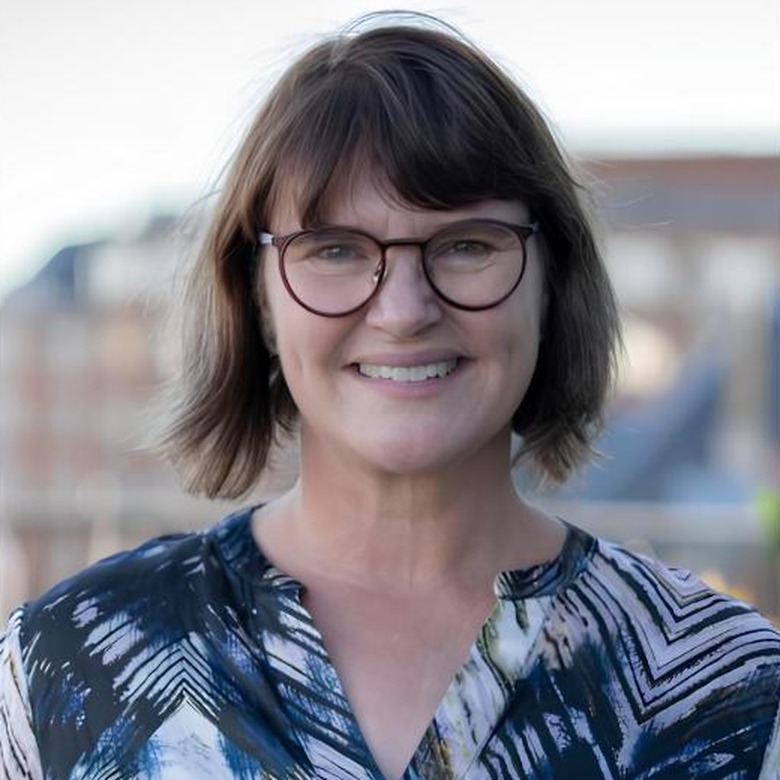
Pernille Hippe Brun
Co-founder and CEO, Session
Pernille Hippe Brun is an experienced executive coach, business psychologist, speaker, and founder. With over two decades of experience in consultancy and leadership, Pernille is a leading expert in strengths-based leadership and sustainable organisational development. She is the co-founder of Session and the author of several books, including Strengths-Based Leadership Handbook and On the Move – Lessons for the Future from Nordic Leaders.
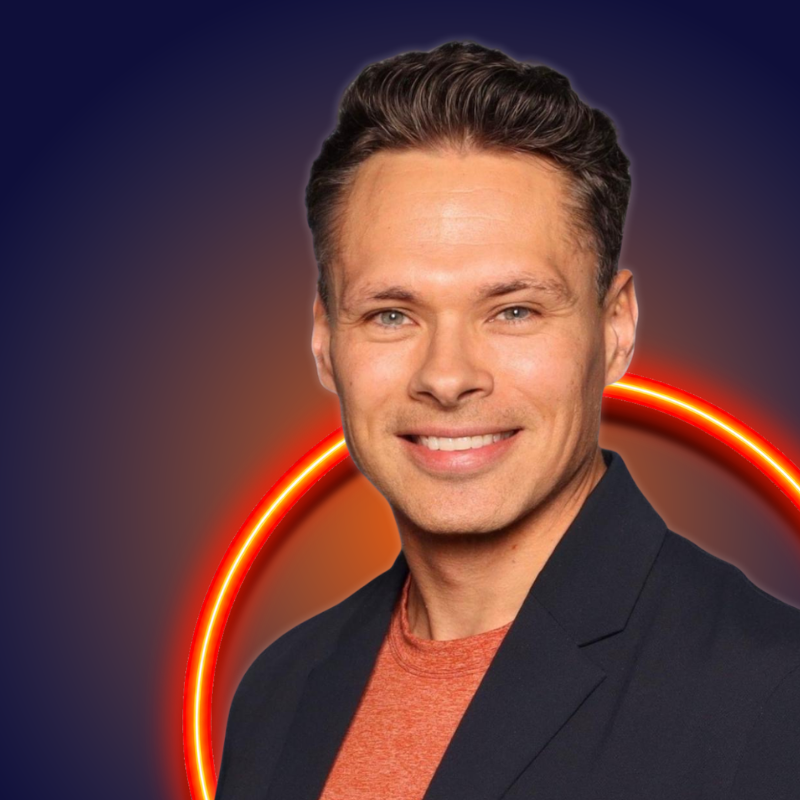 Robin Daniels
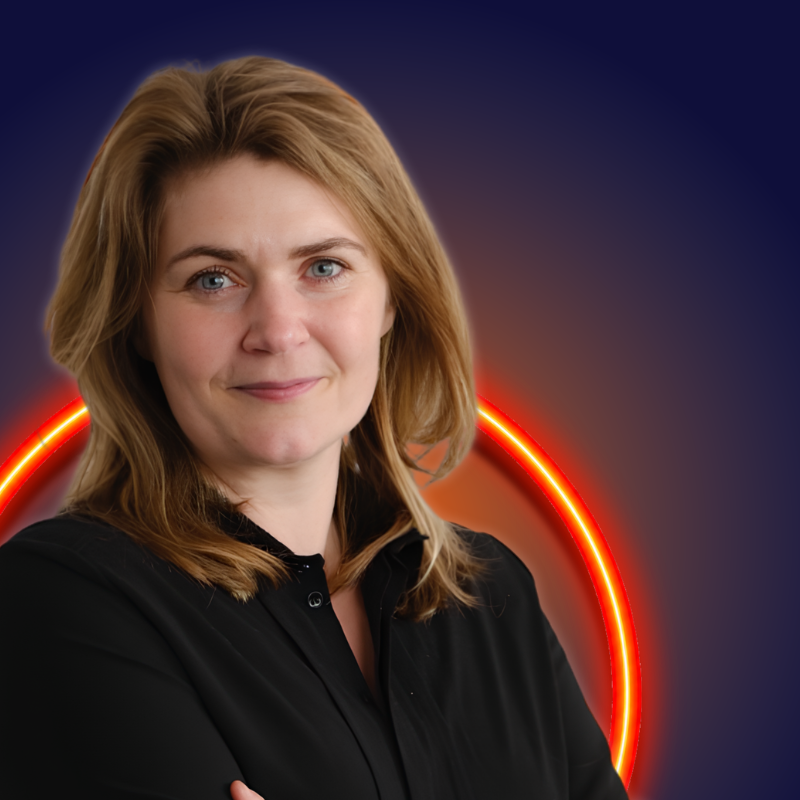 Nina Carøe
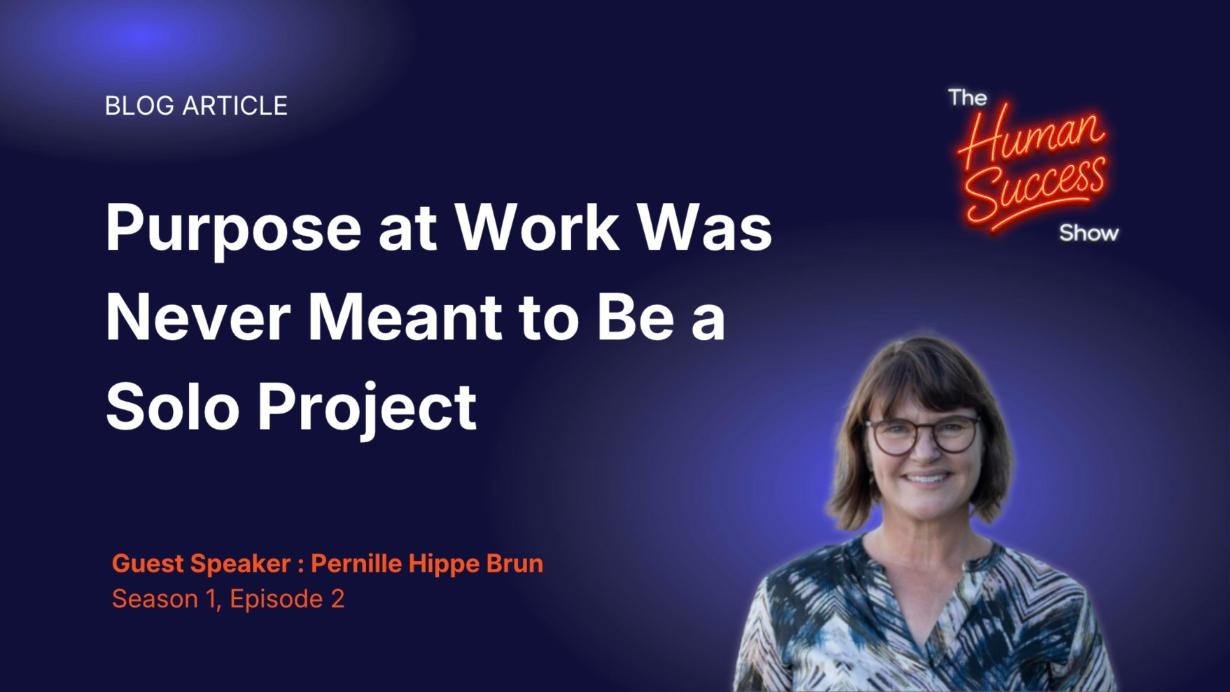
Related article
Purpose at Work Was Never Meant to Be a Solo Project
Robin, Nina and Pernille Hippe Brun explore what creates purpose at work, why change can feel so difficult, and how organizations can help people succeed together.
Read the article →Previous episodes
All episodes
Upcoming episodes
What Makes Great Leadership
- Dec 15Lars Geer Hammershøj
- Jan 5David Perring (Fosway special)
- Jan 12Michael Lopez
- Jan 26Sara Rywe
- Feb 9Jacob Lauritzen
- Feb 23Claire Tingsager
- Mar 9Rasmus Holst